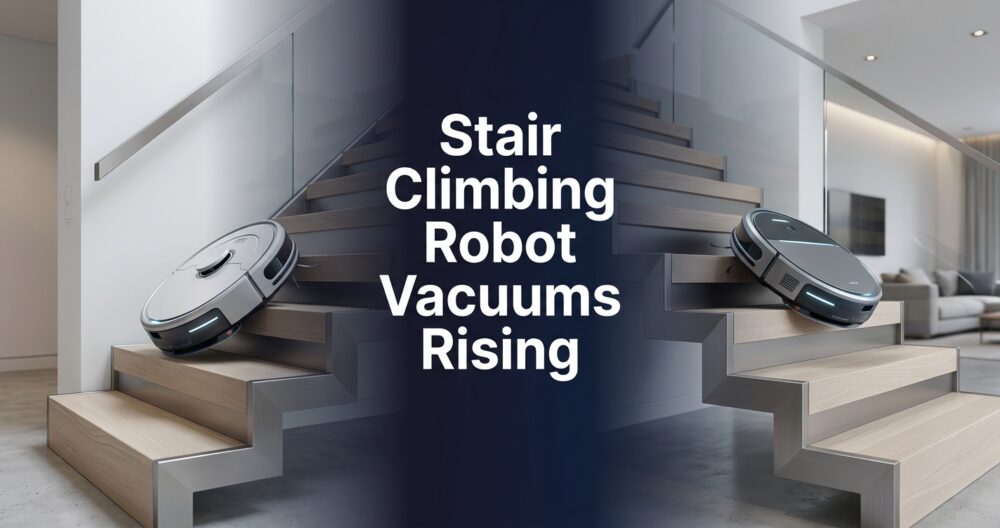
The Rise of Stair Climbing Robot Vacuums
Latest Update: April 16, 2026
In 2026, Stair Climbing Robot Vacuums are finally solving the problem most of us ran into, the “stuck on the first step” moment.
Next gen stair climbers can now scale steps up to 25 cm (9.8 inches) in height, which is a big deal for older homes and homes with less-than-standard stair geometry.
Key Takeaways
- The Rise of Stair-Climbing Robot Vacuums (2026 Edition) is driven by better step detection and safer climbing behavior.
- Look for stair height compatibility, because a “works on some stairs” robot still fails in real homes.
- Battery improvements now matter for whole-home cleaning plans, not just single-level sessions.
- Pet homes need strong edge pickup and reliable hair handling to avoid repeat runs.
- We recommend pairing robotic vacuum convenience with targeted spot cleaning for stubborn messes.
- For broader floor-care planning, our coverage of robotic vacuum options helps you compare features like mapping, pets, and maintenance.
- If you want a second weapon for tough spots, our guides to home cleaning add practical backup.
| Best-for scenario | What to prioritize |
|---|---|
| Multi-level homes | Stair height tolerance and confident climb detection |
| Pet hair routines | Edge pickup, brush design, and “less rework” behavior |
| Busy schedules | Battery endurance across floors and predictable dock returns |
Quick Q&A readers ask in 2026
- Are stair-climbing robot vacuums worth it in 2026? If your home has real steps you cannot vacuum manually every day, yes, the gap is finally smaller.
- What makes stair-climbing robots safer? Better step sensing, smarter climbing profiles, and improved anti-fall behavior.
- Do you still need spot cleaning? For stubborn carpet stains, usually yes, and we’ll show how to pair tools.
Why Stair-Climbing Robot Vacuums Took Off in 2026
The shift in 2026 is not just marketing, it is practical. Homeowners got tired of robots that would map an entire layout, then fail at the stairs the moment you actually needed them to go somewhere else.
What changed is the confidence of the climb. Better step detection, improved control during ascent, and more realistic testing on multi-level floorplans mean fewer “carry it upstairs” weekends.
And once you stop treating stairs like a deal-breaker, the entire cleaning routine changes. You can schedule whole-home sessions, then rely on the robot for daily debris pickup while you focus on deeper cleaning where it counts.
If you want the broader context on how robot vacuums are evolving overall, we keep our robotic vacuum collection updated with feature-driven comparisons and practical value checks.
Stair-Climb Tech: What “Works” Means on Real Steps
In 2026, the best stair-climbing robot vacuums are designed around the reality that stair geometry varies. Some homes have taller risers, different tread depths, and thresholds that confuse older sensor systems.
So when we say a robot “handles stairs,” we mean it maintains traction, keeps its climbing profile stable, and does not panic-stop mid-ascent. That includes handling dust and hair near edges, where wheels and sensors can lose contact.
- Step height compatibility: the robot should scale what’s in your home, not what’s only in demos.
- Reliable detection: it should recognize transitions and start climbing without repeated failures.
- Safe behavior: stable ascent, reduced slip risk, and consistent dock returning after upstairs completion.
- Debris control: hair and fine dust can cause wheel and sensor buildup, so maintenance matters.
Best for Multi-Level Homes: How to Choose Your Stair-Climber in 2026
If your home spans more than one level, your decision should be about consistency. The best models in 2026 are the ones that finish upstairs without begging you to intervene.
Here’s how we narrow it down when we recommend stair-climbing robot vacuums.
- Measure first, trust second: confirm your riser height and whether the robot spec matches what you have.
- Plan for whole-home runs: pick based on battery endurance, because 5-floor cleaning on one charge changes the schedule.
- Choose mapping style that fits your layout: you want fewer “re-learning” moments across floors.
- Account for thresholds and carpet edges: edge cases can become the difference between one-and-done and repeated passes.
- Build a simple maintenance habit: hair buildup near wheels and brushes is the quiet reason performance drops.
One reason we like to connect robotic coverage with other floor-care tools is simple. Robots handle routine debris pickup, but you still need a plan for spot work, stains, and heavy-duty messes that exceed daily pickup.
For that “backup toolbox” approach, we often reference home-cleaning evaluations like portable deep cleaning and pet-focused cleaning. For example, our home cleaning pages help you think in layers, robot for daily, tools for targeted jobs.
Best for Pet Owners in 2026: Stair Robots That Reduce Rework
If you have pets, you already know that “some pickup” is not enough. The best stair-climbing robot vacuums in 2026 are judged by how little you have to re-run, especially along edges and near high-traffic areas.
Robot performance with pets is less about one feature and more about the system. Brush behavior, suction consistency, and how quickly debris gets pulled away from carpet fibers all matter, then wheel traction decides whether the climb stays stable.
We also recommend thinking beyond the robot for hair-heavy homes. When your stairs and landings get hair stuck in corners, you need a routine that combines robot coverage with quick spot extraction.
If you want a pet-focused lens across cleaning tools, we keep our appliance testing and collections updated, including our broader handheld vacuum coverage for fast cleanups between robot runs.
- Look for edge-focused pickup: stairs have corners, landings have seams.
- Prefer easy-to-maintain brush designs: hair removal should not feel like a weekend project.
- Run schedules that match shed cycles: frequent, shorter sessions often beat long, heavy sessions.
Best for Busy Households: Whole-Home Schedules (Without Carrying)
This is where 2026 wins feel immediate. The “carry the robot to the next level” era is fading as battery tech improves and dock behaviors become more predictable.
With battery improvements now supporting cleaning across multiple floors on one charge, you can plan a routine that matches your day. You set the schedule, it handles the multi-level path, and you stop treating stairs as a manual task.
We think the best setup is simple:
- Daily or every-other-day sessions for debris pickup on all levels.
- Weekly brush checks to prevent hair buildup from changing suction and climb behavior.
- Spot cleaning for stubborn messes so the robot does not chase deep stains.
If you want a realistic companion approach for tougher cleanups, our content includes evaluation angles for deep cleaning and stain-focused tools. For example, you can connect the idea of routine upkeep with spot work using our product reviews collection to compare approaches.
Best for Homeowners Who Are Skeptical (We Get It)
It is healthy to keep a healthy degree of skepticism, especially when a product makes big claims. In 2026, stair-climbing robot vacuums are more capable, but performance still depends on your home’s layout.
Here are the common reasons robots underperform on stairs, and how to sanity-check before you commit.
- Dirty sensor zones: dust and hair near detection areas can reduce climb confidence.
- Loose rugs or worn carpet edges: traction issues can stop ascent.
- Unexpected clutter patterns: chairs, toys, and cables can block the stair entry point.
- Inconsistent scheduling: if you start-and-stop routines constantly, the robot has more “unknown” surfaces.
Our one-sentence takeaway: The Rise of Stair-Climbing Robot Vacuums (2026 Edition) is real progress, but you still get the best results when you treat stair cleaning as a routine setup problem, not just a hardware purchase.
To keep your expectations grounded, we also recommend reviewing how robot systems perform in real homes, including pet-focused and multi-surface behavior. Our video collection includes comparisons that help you visualize how tools handle messes and transitions.
Best for Pairing: Robot Upstairs, Deep Cleaning Downstairs
Even with The Rise of Stair-Climbing Robot Vacuums (2026 Edition), the best cleaning results come from a two-tier routine. Let the robot handle daily debris, then use targeted tools when the mess is stubborn.
That approach works especially well for carpet stains, pet accidents, and high-traffic scuffs that linger. Robots can reduce how often these messes happen, but they do not replace stain removal.
For readers who want practical backup, our home cleaning and product reviews are built to help you choose a companion tool instead of over-relying on one device.
- Use the stair robot for routine floors: crumbs, dust, and hair across levels.
- Use deep cleaning tools for tough spots: focus on stain stages instead of repeating robot runs.
- Protect carpet edges: consistent maintenance reduces drag that can affect climbs.
What We’d Recommend First (Our Best-for Shortlist Logic)
Because pricing and model-level specs were not reliably available in the research pages we reviewed, we are going to recommend by decision logic instead of guessing numbers.
This keeps our guidance honest and useful in 2026, where stair compatibility can vary more than people expect.
Here’s the checklist we would use to pick the best The Rise of Stair Climbing Robot Vacuums for your home in 2026.
| Best-for | Decision rule in plain English | Why it matters |
|---|---|---|
| Older homes | Confirm it can scale your step height, up to the highest spec your stairs match. | This is the difference between “works sometimes” and consistent climbs. |
| Whole-home schedules | Prioritize battery endurance so you can complete multiple floors in one session. | It reduces re-runs and avoids manual carry breaks. |
| Pet households | Choose hair handling and edge pickup that minimizes rework on landings. | Less rework means fewer times you clean around the stairs. |
Conclusion
The Rise of Stair-Climbing Robot Vacuums (2026 Edition) is the first time we feel confident telling homeowners that stairs do not have to be the weak link in their routine.
With better stair height scaling, stronger battery support across multiple floors, and improved control during ascent, these robots can finally deliver what multi-level households actually need in 2026.
If you buy with a simple plan, confirm step compatibility, choose battery endurance for whole-home runs, and pair the robot with targeted spot cleaning when things get tough, you will get a cleaning routine that feels genuinely hands-off.
Frequently Asked Questions
Are stair-climbing robot vacuums worth it in 2026?
For many multi-level homes, The Rise of Stair-Climbing Robot Vacuums (2026 Edition) makes the difference between “cute gadget” and consistent daily help. If your stairs are the reason you stopped using a robot, the 2026 improvements in step handling can change that.
What step height do the best stair-climbing robot vacuums handle in 2026?
Next-gen stair climbers in 2026 can now scale steps up to 25 cm (9.8 inches). That’s the kind of spec that matters most when you have older architecture or stair risers that are not “standard” in demo rooms.
Can a stair-climbing robot vacuum clean multiple floors on one charge in 2026?
Yes, battery improvements in 2026 mean some models can support cleaning up to 5 different floors on a single charge. This helps you schedule whole-home sessions without constantly moving the dock or carrying the robot.
Do stair-climbing robot vacuums work well with pet hair in 2026?
They can, but you need to judge them by rework, especially on landings and edges. In The Rise of Stair-Climbing Robot Vacuums (2026 Edition), pet-ready performance comes from consistent suction, manageable brush maintenance, and stable traction during climbs.
What should I do to prevent a robot from getting stuck on the stairs in 2026?
Clear the entry point to the stairs, keep the wheel and sensor areas free from hair buildup, and avoid loose rugs near the stair edge. This is the difference between a robot that “can climb” and one that climbs reliably in your home in 2026.
Do I still need a handheld or deep cleaner if I buy a stair-climbing robot vacuum?
Usually yes. Even with The Rise of Stair-Climbing Robot Vacuums (2026 Edition), stubborn carpet stains and heavy spot messes still need targeted tools, while the robot handles the daily debris work across floors.