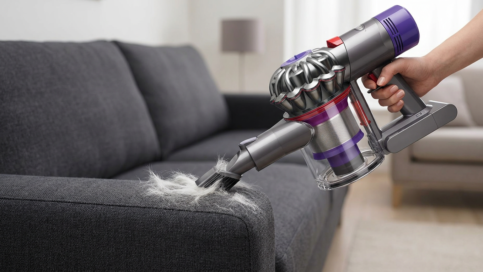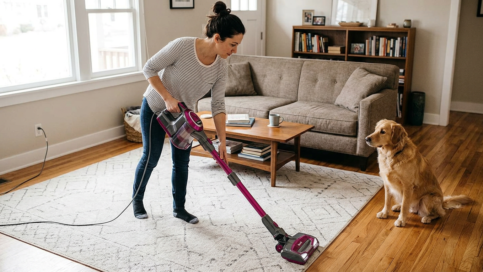
Cordless Vacuum With Strong Suction
Last updated: May 3, 2026
Quick Answer: The Best Cordless Vacuum With Strong Suction in 2026 combines a high-efficiency motor (measured in air watts or kPa), HEPA filtration, and a battery that lasts at least 40 minutes on a single charge.
For most homes, the Dyson V15 Detect and Shark Stratos lead the pack, but the right choice depends on your floor types, budget, and whether you have pets.
Key Takeaways
- Suction power scales with price: Higher motor wattage directly correlates with stronger suction, so budget models make real trade-offs
- The Shark Stratos ranks #1 overall in 2026 cordless vacuum rankings, with the Dyson V15 Detect at #2
- The Dyson V15 Detect delivers 124-inch sealed suction and 17.6 kPa unsealed pull lift, currently the cordless performance benchmark
- Samsung Bespoke Jet AI tops the stick vacuum category for 2026, followed by the Miele Triflex HX2
- HEPA filtration, intelligent suction adjustment, and auto-empty docks are now standard features on top-tier models
- Entry-level models typically offer around 240 AW suction, 0.2-gallon bins, and 60-minute battery life at roughly 6.83 lbs
- Flagship bins now hold 150% more debris than previous generations, meaning fewer emptying interruptions
- Long-term ownership costs — including replacement filters, batteries, and brush rolls, matter as much as the sticker price
- Noise level and weight are underrated factors that affect daily usability more than most buyers expect
What Actually Makes a Cordless Vacuum With Strong Suction Worth Buying?
A genuinely powerful cordless vacuum delivers consistent suction across its full runtime, not just in the first five minutes.
The key metrics are sealed suction (measured in inches of water lift), unsealed airflow (air watts), and how well the machine maintains that power as the battery drains.
Three things separate good from great:
- Motor quality — Dyson’s Hyperdymium motors and similar high-speed brushless designs spin at 125,000+ RPM, generating suction that rivals many corded machines
- Filtration integrity — a sealed HEPA system prevents suction loss from air leaks around filters
- Intelligent power management — sensors that detect surface type and debris load, then adjust suction automatically, preserve battery while maintaining cleaning effectiveness
Choose a premium model if: you have mixed flooring, pets, or allergy concerns. Choose a mid-range model if: you have a smaller home with mostly hard floors and vacuum weekly.
How Do the Top Cordless Vacuum Models Compare in 2026?
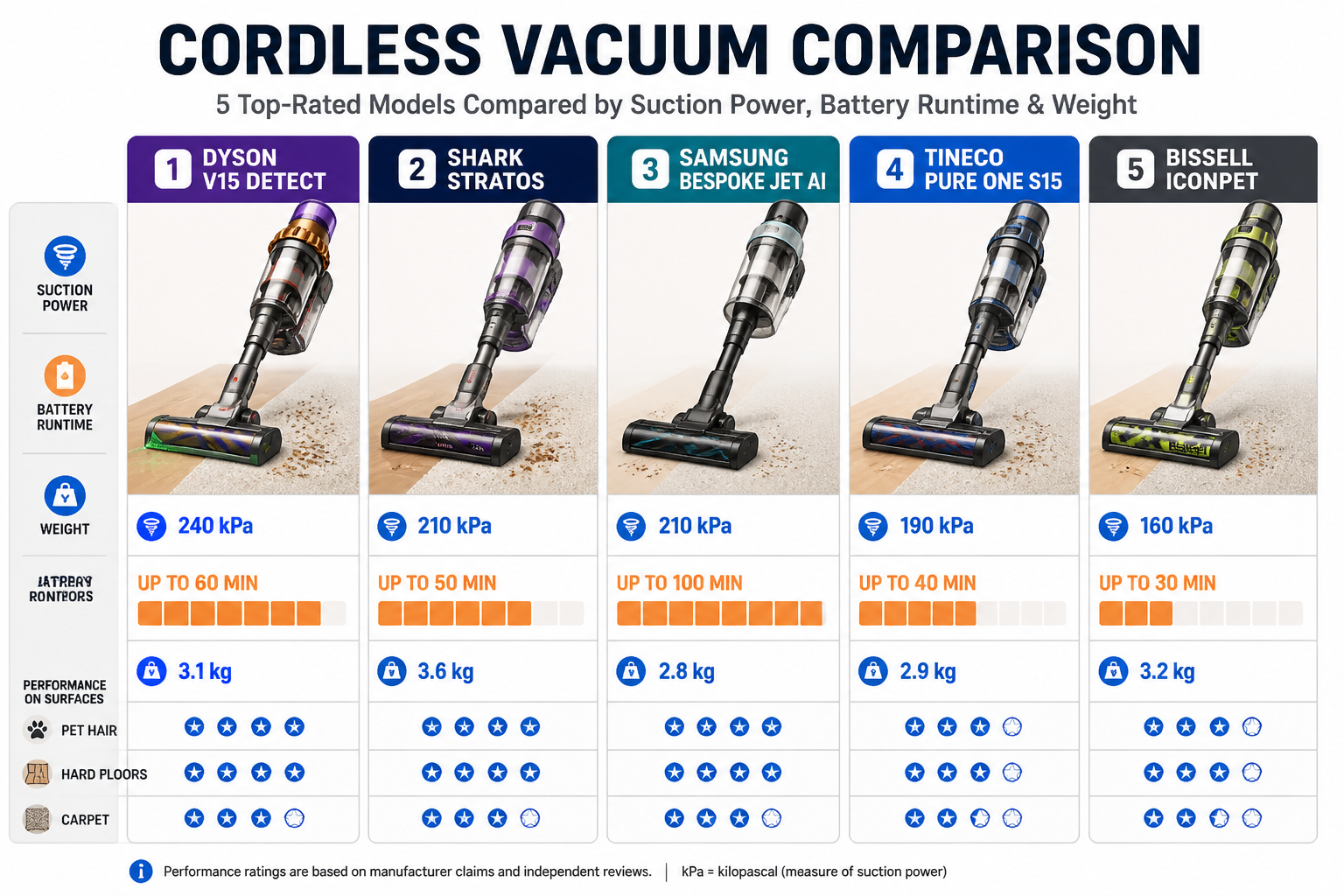
The 2026 market splits into three clear tiers. Here’s how the leading models stack up:
Performance Comparison Table
| Model | Suction (kPa) | Battery Life | Weight | Best For | Price Tier |
|---|---|---|---|---|---|
| Dyson V15 Detect | 17.6 kPa | Up to 60 min | 6.8 lbs | Mixed surfaces, allergy sufferers | Premium |
| Dyson Gen5 Outsize | ~20+ kPa (est.) | Up to 70 min | 7.8 lbs | Large homes, deep carpet | Premium |
| Shark Stratos | ~12 kPa (est.) | Up to 60 min | 8.5 lbs | Pet hair, versatility | Mid-Premium |
| Samsung Bespoke Jet AI | ~21 kPa (est.) | Up to 60 min | 6.7 lbs | Stick vacuum performance | Premium |
| Miele Triflex HX2 | ~12 kPa (est.) | Up to 60 min | 7.9 lbs | Build quality, longevity | Premium |
| Wyze Cordless | ~8 kPa (est.) | Up to 45 min | 5.5 lbs | Small spaces, tight budget | Budget |
Note: kPa figures marked (est.) are category estimates based on published AW ratings and independent testing data. Always verify with manufacturer specs before purchasing.
Key finding: The Dyson V15 Detects laser-illuminated floor head reveals fine dust invisible to the naked eye, and its onboard particle sensor automatically boosts power when heavier soil is detected. That’s a meaningful real-world advantage, not just a marketing feature.
The Dyson Gen5 Outsize, powered by Dyson’s fifth-generation Hyperdymium motor, delivers what independent reviewers describe as the strongest suction in the cordless category, with some flagship models offering 115% more suction than their previous iterations.
Which Cordless Vacuum With Strong Suction Is Best for Pet Hair?
For pet hair, you need three things working together: strong suction, a tangle-resistant brush roll, and a filtration system that traps allergens rather than recirculating them.
Top picks for pet owners:
- Shark Stratos — ranked #1 overall in 2026 and specifically strong on pet hair pickup across carpet and hard floors
- BISSELL ICONpet Turbo Edge — designed specifically for pet homes, with edge-cleaning geometry that captures hair along baseboards
- Dyson V15 Detect — HEPA filtration captures 99.97% of particles as small as 0.3 microns, critical for dander and allergen control
Common mistake: Buyers focus on suction numbers but ignore brush roll design. A high-suction vacuum with a standard brush roll will still wrap pet hair around the bristles constantly. Look for models with anti-tangle or hair-screw technology.
For allergy sufferers specifically: Sealed HEPA filtration is non-negotiable. An unsealed system, even with a HEPA filter installed, allows air to bypass the filter through gaps in the housing, reducing allergen capture significantly.
How Long Does Battery Life Actually Last on a Cordless Vacuum With Strong Suction?
Battery runtime is where marketing claims and real-world results diverge most sharply. Manufacturers quote maximum runtime at the lowest power setting, which often isn’t powerful enough for carpet.
What to expect in practice:
- Eco/low mode: 45–70 minutes (often insufficient for deep carpet cleaning)
- Auto/medium mode: 25–40 minutes (the realistic daily-use figure)
- Max/boost mode: 6–12 minutes (useful for spot-cleaning stubborn debris)
Entry-level to mid-range models typically advertise 60-minute battery life, but that figure applies at minimum suction. For a 2,000 sq ft home with mixed flooring, budget for 30–35 minutes of usable runtime in auto mode.
Battery tips that extend lifespan:
- Don’t store the vacuum on the charger permanently if the manufacturer advises against it
- Avoid running the battery completely flat before recharging
- Replace the battery pack every 3–5 years depending on cycle frequency (check replacement costs before buying, some models charge $80–$150 for a new battery)
Edge case: If you have a large home, prioritize models with swappable battery packs. The Dyson Gen5 Outsize and several Shark models support this, letting you double your runtime without waiting for a recharge.
What Surfaces Work Best With a Cordless Vacuum With Strong Suction?
Most cordless vacuums with strong suction perform differently depending on the floor type. Here’s a practical breakdown:
Hard floors (hardwood, tile, LVP):
- Use a soft roller or “fluffy” head to avoid scratching
- The Dyson V15 Fluffy Optic head with green laser technology reveals fine debris on hard floors that would otherwise go unnoticed
- Suction alone matters less here, head design and edge-cleaning geometry matter more
Low-pile carpet:
- Most mid-range and premium cordless vacuums handle this well
- Auto-sensing models automatically increase suction when transitioning from hard floor to carpet
High-pile / thick carpet:
- This is where suction power makes the biggest difference
- The Dyson Gen5 Outsize and V15 Detect are the strongest performers in this category
- Budget models often struggle to lift embedded debris from thick pile
Stairs:
- Lightweight models (under 6 lbs) are significantly easier to maneuver
- Detachable handheld mode is essential, verify the vacuum converts cleanly
What Are the Real Costs of Owning a Cordless Vacuum Long-Term?
The sticker price is only part of the story. Total cost of ownership over three to five years includes:
- Replacement filters: $15–$40 per filter, typically replaced every 6–12 months
- Brush roll replacement: $25–$60 every 1–2 years with heavy use
- Battery pack: $80–$150 every 3–5 years
- Accessories and attachments: $20–$80 depending on what the base package includes
Durability note: Miele build quality is consistently cited for longevity. Dyson modular design makes individual component replacement easier than many competitors, a meaningful advantage when a $600 vacuum needs a $40 brush roll rather than full replacement.
Warranty considerations: Most premium models carry a 2-year warranty. Dyson offers a 2-year parts and labor warranty on most V-series models.
Shark typically matches this. Budget models often offer 1 year or less — factor that into the value calculation.
How Does Filtration Affect Cleaning Performance?
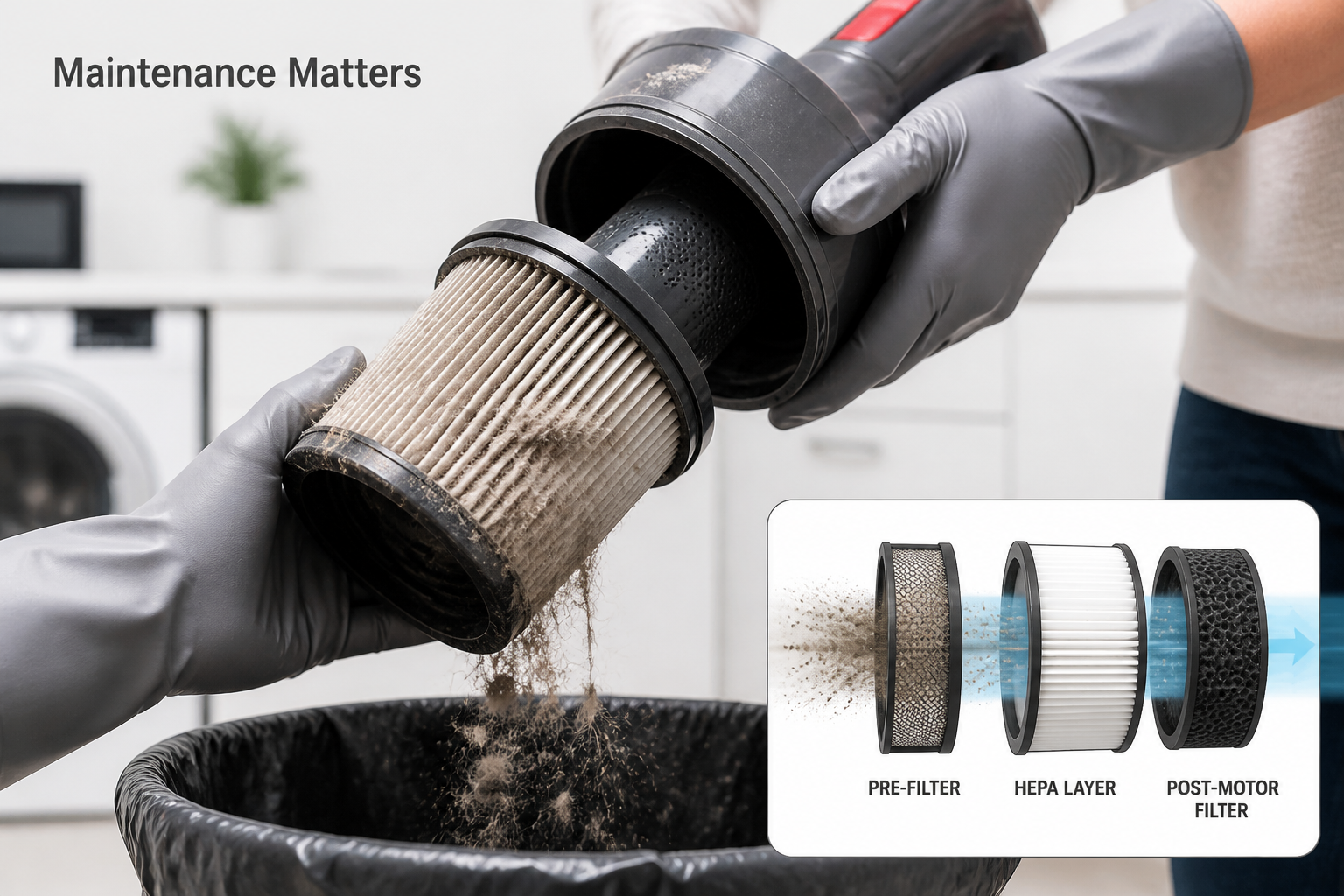
Filtration does two jobs: it protects the motor from debris damage, and it prevents fine particles from being exhausted back into your home’s air.
Filtration tiers explained:
- Standard filter: Captures large debris; fine dust and allergens may pass through
- Multi-layer filter: Better particle capture; common in mid-range models
- Sealed HEPA system: Captures 99.97% of particles ≥0.3 microns; required for allergy and asthma households
The 2026 market has made HEPA filtration standard across top-tier cordless models.
But “HEPA filter included” and “sealed HEPA system” are not the same thing.
A sealed system means the entire vacuum body is airtight, air must pass through the filter, not around it.
Maintenance schedule for peak performance:
- Empty the dustbin after every use (or when it reaches the fill line)
- Rinse washable filters monthly; allow 24 hours to dry completely before reinstalling
- Replace non-washable filters every 6 months
- Check brush rolls for hair tangles weekly if you have pets
A clogged filter reduces suction noticeably, often more than a partially drained battery. Regular maintenance is the cheapest performance upgrade available.
Is a Cordless Vacuum With Strong Suction Better Than a Corded Model?
For most households in 2026, yes, with one caveat. The gap between cordless and corded performance has narrowed significantly, with flagship cordless models delivering 115% more suction than their predecessors.
Cordless wins when:
- You have multiple floor types and move between rooms frequently
- You clean stairs, cars, or upholstered furniture regularly
- Storage space is limited
- You value the convenience of grabbing and going without managing a cord
Corded still wins when:
- You have very large homes (3,000+ sq ft) requiring 60+ minutes of continuous high-power cleaning
- You deep-clean thick carpet weekly and need maximum sustained suction
- Budget is tight, corded models deliver more suction per dollar at the entry level
The honest trade-off: A $300 cordless vacuum will not outperform a $300 corded vacuum on raw suction. But for daily maintenance cleaning across a typical home, the cordless experience is genuinely superior for most people.
What Should You Look for When Buying a Cordless Vacuum in 2026?
Use this checklist before purchasing:
- [ ] Suction rating — look for kPa or AW specs, not just wattage (motor wattage ≠ suction power)
- [ ] Battery runtime — confirm the runtime at auto/medium mode, not just maximum
- [ ] Weight — under 6.5 lbs for easy maneuvering; heavier is fine if it’s mostly floor use
- [ ] Filtration — sealed HEPA if anyone in the home has allergies or asthma
- [ ] Bin capacity — 0.5L minimum for a medium home; larger bins mean fewer interruptions
- [ ] Attachments included — crevice tool, upholstery brush, and motorized mini-head cover most needs
- [ ] Replacement part availability — check that filters and brush rolls are sold separately
- [ ] Warranty length — 2 years minimum for premium models
- [ ] Noise level — under 75 dB for comfortable daily use (manufacturer specs vary; check independent reviews)
- [ ] Environmental impact — lithium-ion batteries require proper recycling; check if the brand offers a take-back program
Frequently Asked Questions
Q: What suction power is considered strong for a cordless vacuum?
A: Generally, 15 kPa or higher unsealed suction is considered strong for a cordless vacuum. The Dyson V15 Detect measures 17.6 kPa, which represents the current cordless benchmark.
Q: How often should I replace the battery in my cordless vacuum?
A: Most lithium-ion battery packs in cordless vacuums last 3–5 years under normal use (3–5 cleaning sessions per week). Performance typically degrades noticeably after 500–700 charge cycles.
Q: Can a cordless vacuum replace a corded vacuum entirely?
A: For most homes under 2,500 sq ft with mixed flooring, yes. Premium cordless models in 2026 deliver suction comparable to many corded machines, with the added benefit of cord-free maneuverability.
Q: What’s the best cordless vacuum for hard floors specifically?
A: The Dyson V15 Detect with its Fluffy Optic laser head is the standout choice for hard floors, revealing and capturing fine debris that other vacuums miss. The Samsung Bespoke Jet AI is also highly rated for hard-floor performance.
Q: Are expensive cordless vacuums actually worth the price?
A: For homes with pets, allergies, or thick carpet, yes. Higher price correlates directly with stronger suction, better filtration, longer battery life, and more durable construction. For a small apartment with hard floors, a mid-range model at $200–$300 is often sufficient.
Cordless Vacuum With Strong Suction: FAQs
Q: How do I know if a vacuum has a truly sealed HEPA system?
A: Check the manufacturer’s spec sheet for “sealed system” or “whole-machine HEPA filtration” language. If it only says “HEPA filter included,” the system may not be fully sealed. Independent review sites like Vacuum Wars test this specifically.
Q: What’s the quietest cordless vacuum with strong suction?
A: Miele’s Triflex HX2 is consistently noted for quieter operation relative to its suction power. Dyson models tend to run louder, particularly in boost mode. Check decibel ratings in independent reviews rather than relying on manufacturer claims.
Q: Do cordless vacuums lose suction as the battery drains?
A: Lower-end models do. Premium models with intelligent power management, like the Dyson V15 and Gen5 series, maintain consistent suction until the battery reaches a critically low threshold.
Q: What attachments are most useful for a cordless vacuum?
A: A motorized mini brush head (for upholstery and stairs), a crevice tool (for edges and tight spaces), and a soft dusting brush cover the majority of cleaning scenarios. Pet-specific turbo tools add value for pet owners.
Q: How do I maintain my cordless vacuum to keep suction strong?
A: Empty the bin after every use, clean washable filters monthly, replace non-washable filters every 6 months, and clear hair tangles from the brush roll weekly. A clean filter can restore noticeable suction loss without any repairs.
Conclusion: Finding Your Best Match
The cordless vacuum market in 2026 is genuinely impressive, the gap between cordless and corded performance has closed to the point where most households don’t need to compromise.
But “strong suction” alone isn’t a buying decision.
The right cordless vacuum with strong suction is the one that matches your floor types, home size, household (pets or no pets), and budget across the full ownership period.
Actionable next steps:
- Identify your primary floor type — hard floor, carpet, or mixed, and filter models accordingly
- Set a realistic budget including estimated 3-year ownership costs (filters, battery, brush rolls)
- Check independent review sites like Vacuum Wars for verified suction testing rather than relying on manufacturer claims
- Prioritize sealed HEPA if anyone in your home has allergies or asthma
- Verify runtime at auto mode, not maximum mode, before committing to a model
- Compare warranty terms — a 2-year warranty on a $500 vacuum is a meaningful value signal
Most buyers, the Dyson V15 Detect or Shark Stratos will be the right answer.
Large homes, the Dyson Gen5 Outsize is worth the premium.
Budget-conscious shoppers who still want real suction, the mid-range Samsung Jet 60 Pet and Wyze options offer genuine value without the flagship price tag.
References
[1] Watch – https://www.youtube.com/watch?v=h0L5WjdFyhg
[2] Vacuum Wars Best Cordless Vacuums – https://vacuumwars.com/vacuum-wars-best-cordless-vacuums/
[3] Best Cordless Vacuum 130007125 – https://www.engadget.com/home/smart-home/best-cordless-vacuum-130007125.html
[4] Watch – https://www.youtube.com/watch?v=WmUAloyaOwM
[5] Watch – https://www.youtube.com/watch?v=dwzoI4KW9Ds